





Hotel Bed Bug Inspection Before You Check In: A Hot Bugz Traveler’s Guide for the First Five Minutes

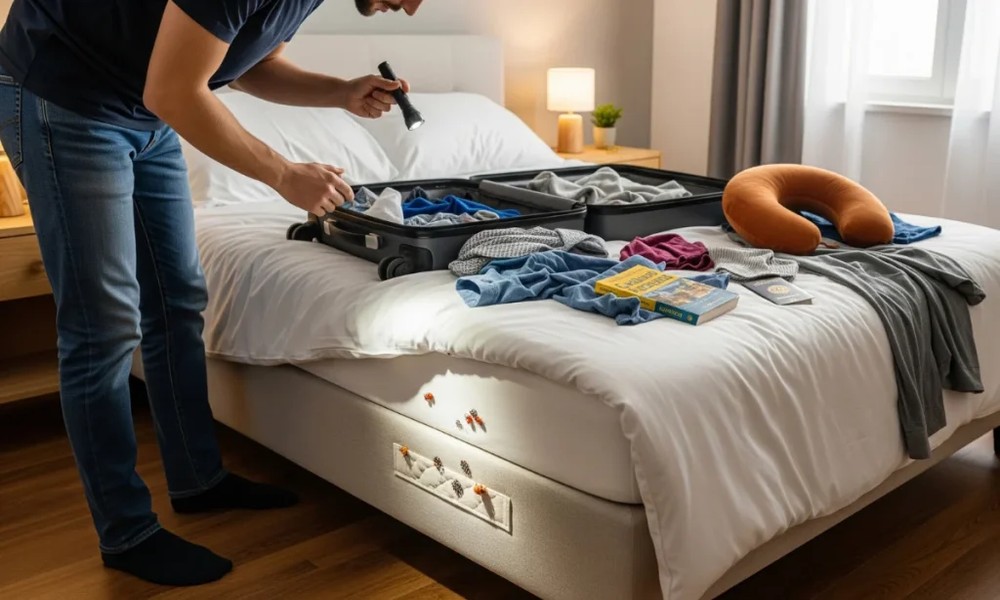
A business traveler arrives at a downtown hotel after a long flight, drops her suitcase on the bed, takes a shower, and falls asleep. Three weeks later she has welts on her arms and a confirmed bed bug infestation in her own bedroom. The team at Hot Bugz handles a steady stream of post-travel infestations every year from Denver-area customers who picked up bed bugs in a hotel and brought them home in their luggage. The single behavior that prevents most of these cases takes about five minutes and happens before the suitcase comes off the floor. Hotels at every price point can have bed bugs, including luxury properties with strong reputations, because bed bugs travel on guests rather than on furniture, and any hotel that hosts traveling guests is exposed to the same introduction risk.
The inspection is short, the technique is straightforward, and the rule about where to put your suitcase matters more than most travelers realize.
The First Rule: Where the Suitcase Goes
Before any inspection happens, the suitcase needs to go somewhere safe. Not on the bed. Not on the upholstered chair. Not on the carpeted floor near the bed. Not on the luggage rack if the rack is sitting on carpet against the bed-side wall.
The safest location for luggage during the initial inspection is the bathroom. The bathroom floor is typically tile or vinyl, the surfaces are smooth and easy to inspect visually, and there is no upholstered furniture or fabric for bed bugs to harbor in. Place the suitcase on the bathroom floor or in the bathtub during your inspection. If the inspection comes up clean, the suitcase moves to the luggage rack with the rack pulled away from the wall.
The reason this matters: bed bugs do not jump or fly. They have to crawl from a harborage to the suitcase, and the path of least resistance is short distances over fabric or carpet. A suitcase placed on a bed for thirty minutes during check-in is exactly the introduction vector hotels generate. A suitcase parked on a tile bathroom floor for the same thirty minutes has effectively no exposure.
Travelers who are particularly cautious bring hard-sided luggage rather than soft-sided, because hard plastic shells provide fewer harborage opportunities and are easier to inspect on return.
The Five-Minute Inspection
The inspection focuses on four locations in a specific order. The total time investment is roughly five minutes, and the inspection is conclusive in most hotel rooms.
The Mattress Seams and Piping
Pull back the top sheet, blanket, and any decorative bedspread to expose the mattress. Run a flashlight (most phone flashlights are bright enough) along the piping and seams at the head of the mattress, paying particular attention to the corners. Use your fingers to gently pull the seam open as you go.
Look for three things specifically. Live bugs (reddish-brown, apple-seed sized, flat and oval). Dark fecal stains the size of a pen tip, often clustered in seam folds. Translucent shed exoskeletons retained in the seam. Any one of these is conclusive evidence.
The head-of-bed seams are the highest-yield inspection site because bed bugs harbor close to where the host’s head rests during sleep. The foot-of-bed seams are worth a glance but rarely show evidence in a moderately infested room.
The Box Spring and Bed Frame
Lift the mattress at the head of the bed enough to inspect the top of the box spring. The seam where the box spring meets the mattress and the corners of the box spring fabric are common harborages. Look for the same evidence: live bugs, fecal stains, shed skins.
If the bed has a wooden frame, run the flashlight along the joints, screw holes, and any cracks in the wood. Wooden bed frames provide more harborage than metal frames.
The Headboard
The headboard is the single most overlooked inspection site and often the most informative. Hotel headboards are usually mounted to the wall rather than attached to the bed frame, which means a heavily infested headboard can house a substantial population without obvious mattress evidence.
If the headboard is not too heavy, lift it slightly off its wall mounts to inspect the back side. The crack between headboard and wall, and the seam where the upholstery meets the wood frame, are prime harborages. If the headboard cannot be moved easily, run the flashlight along the visible edges and into the corners.
A heavily infested headboard often shows fecal stains visible on the wall just behind it, sometimes in a streak pattern that traces where bugs have moved between the headboard and other harborages.
The Nightstand and Adjacent Furniture
Open the nightstand drawer and run the flashlight along the joints and corners. Pull out any drawer liner if there is one and check underneath. A nightstand sitting against the bed-side wall is sometimes a secondary harborage, particularly in older hotels.
Look at the carpet edge along the bed-side wall (the gap between baseboard and carpet) for fecal stains and shed skins. This is a tertiary location but easy to check while you’re already in position.
What to Do If You Find Evidence
Finding evidence in a hotel room does not require panic. The response is calm and systematic.
Do not unpack. Move the suitcase from the bathroom directly to the hallway. Do not place any clothing or personal items on the bed, the chair, or any soft surface in the room. Take the suitcase with you when you leave the room.
Document the evidence with photographs. Phone-camera close-ups of fecal stains, shed skins, or live bugs in the seams provide proof for the conversation with the front desk and for any insurance or liability discussion later. Include a coin or finger in the photo for scale.
Request a different room with the front desk. Ask specifically for a room not adjacent to (or directly above or below) the affected room, because bed bugs can travel through wall voids between connected rooms. A reasonable hotel will move you. A hotel that refuses or hedges is signaling that bed bug issues are a known problem, in which case requesting a refund and going to a different hotel is the right move.
Inspect the new room with the same five-minute protocol before unpacking. The hotel’s housekeeping department generally cannot guarantee that adjacent rooms are clear, and the inspection is your only protection.
If the only available alternative is to stay in the same hotel and you have any reason to suspect that a different room might also be affected, leave. The cost of one night at a different hotel is dramatically lower than the cost of treating a bed bug introduction at home.
The Return-Home Protocol
Even with a clean inspection, the return home benefits from a few protective behaviors.
Unpack in the garage, the laundry room, or another non-bedroom location. Do not bring the suitcase into the bedroom under any circumstances during the unpacking. Pull all clothing directly out of the suitcase and into a clothes dryer (not just a washing machine – the heat is what kills any bed bugs and eggs that might have hitched a ride). Run the dryer on high heat for at least 30 minutes, regardless of what the clothing care label suggests.
Items that cannot go through a hot dryer (leather goods, dry-clean-only items, electronics) should be inspected carefully and either bagged for several months or treated through specialty means.
Inspect the suitcase itself before storing it. Pay particular attention to the seams, the piping, and the wheel housings, all of which are common bed bug harborages on luggage. A visual inspection plus a thorough vacuuming of the empty suitcase, with disposal of the vacuum bag in an outside trash bin, handles most low-level introductions.
Store the empty suitcase in a non-bedroom location (basement, garage, hall closet) rather than in the bedroom closet. A bed bug that survived the inspection on a stored suitcase will eventually emerge, and the bedroom is the worst place for that to happen.
When the Worst Already Happened
If you traveled, didn’t inspect, and now suspect bed bugs in your home, the response framework is different. Confirm the infestation through a focused inspection of your own bedroom (mattress seams, box spring, headboard, nightstand). If you find evidence, do not start moving items between rooms, do not bug bomb, and do not delay calling for professional inspection.
Hot Bugz handles travel-introduced bed bug infestations regularly across the Denver Front Range area. The structural difference between heat treatment and chemical treatment matters most for these cases because the introduction is often early-stage and contained, which means a single thorough heat treatment can eliminate the problem before it spreads through the rest of the home.
If you are returning from travel and have any concern that bed bugs may have come home with you, reach out to Hot Bugz to walk through the inspection and the appropriate next steps. Travel-introduced infestations are easier to handle in the first two weeks than in the first two months, and the call costs nothing.
